The Connected Ecosystem: Why Unified Platforms Will Define the Next Era of Business
There's a number most business leaders don't track: how many tools their company uses. For the average SMB with 50 to 500 employees, the answer is somewhere between 8 and 15. A CRM here. A project tracker there. Spreadsheets for finance. WhatsApp for everything in between.
On the surface, each tool solves a problem. But zoom out and you'll see something else: a fragmented operating environment where context is constantly lost, decisions are made on incomplete data, and teams spend more energy coordinating than creating.
The Hidden Cost of Disconnection
When your sales team closes a deal in one tool and your delivery team picks it up in another, something gets lost in translation. Scope details. Client preferences. Timeline expectations. A study by McKinsey found that knowledge workers spend nearly 20% of their week searching for internal information or tracking down colleagues who can help with specific tasks.
That's one full day per week, per employee, lost to the gaps between systems.
And it compounds. Finance doesn't have visibility into which projects are profitable until month-end. HR can't see which teams are overburdened until someone quits. Sales promises timelines that delivery can't meet because there's no shared capacity view.
What a Connected Ecosystem Actually Looks Like
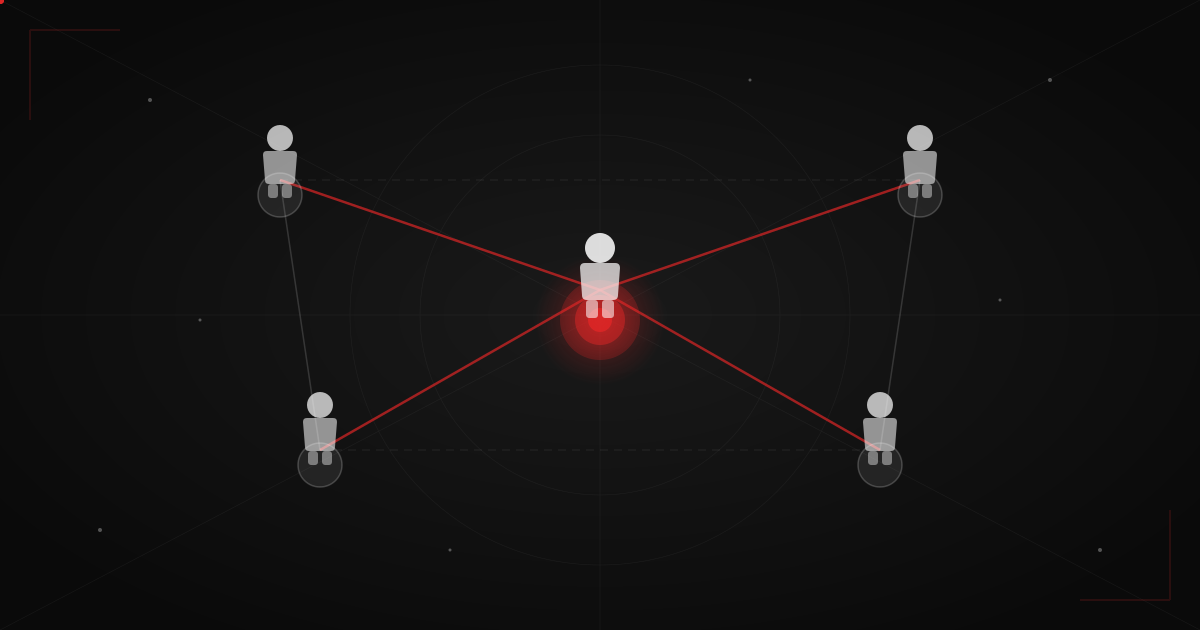
A connected ecosystem isn't about integrating your existing tools with APIs and middleware. That's duct tape. A truly connected system is one where Sales, Projects, Manufacturing, HR and Finance share the same data layer from day one.
When a deal closes, the project is created automatically with the right scope, budget, and team allocation. When an employee logs hours, those hours flow into both project tracking and payroll. When an invoice is raised, it's tied to the project, the team, and the P&L, without anyone copying numbers between tabs.
The Intelligence Multiplier
Here's where it gets interesting. When all your operational data lives in one system, AI becomes genuinely useful. Not as a chatbot that answers generic questions, but as an intelligence layer that sees patterns humans can't.
It can tell you that projects with more than three scope changes in the first month have a 70% chance of going over budget. It can flag that your top-performing sales rep is generating deals that consistently underperform in delivery. It can predict cash flow gaps weeks before they happen by connecting pipeline data with project timelines and payroll cycles.
None of this is possible when your data lives in 10 different tools.
The Shift Is Already Happening
The companies that will thrive in the next decade aren't the ones with the best individual tools. They're the ones that operate as a single, connected system where every department has the full picture.
The era of best-of-breed, where you pick the best tool for each function, is giving way to best-of-system, where the value comes from how everything works together.
For SMBs especially, this shift is existential. Large enterprises can afford integration teams and middleware. Growing businesses cannot. They need a platform that's unified from the start.
The Bottom Line
A connected ecosystem isn't a nice-to-have. It's the infrastructure layer that determines whether your company can scale smoothly or will keep hitting the same operational ceiling every time you grow.
The question isn't whether to unify. It's how soon.